
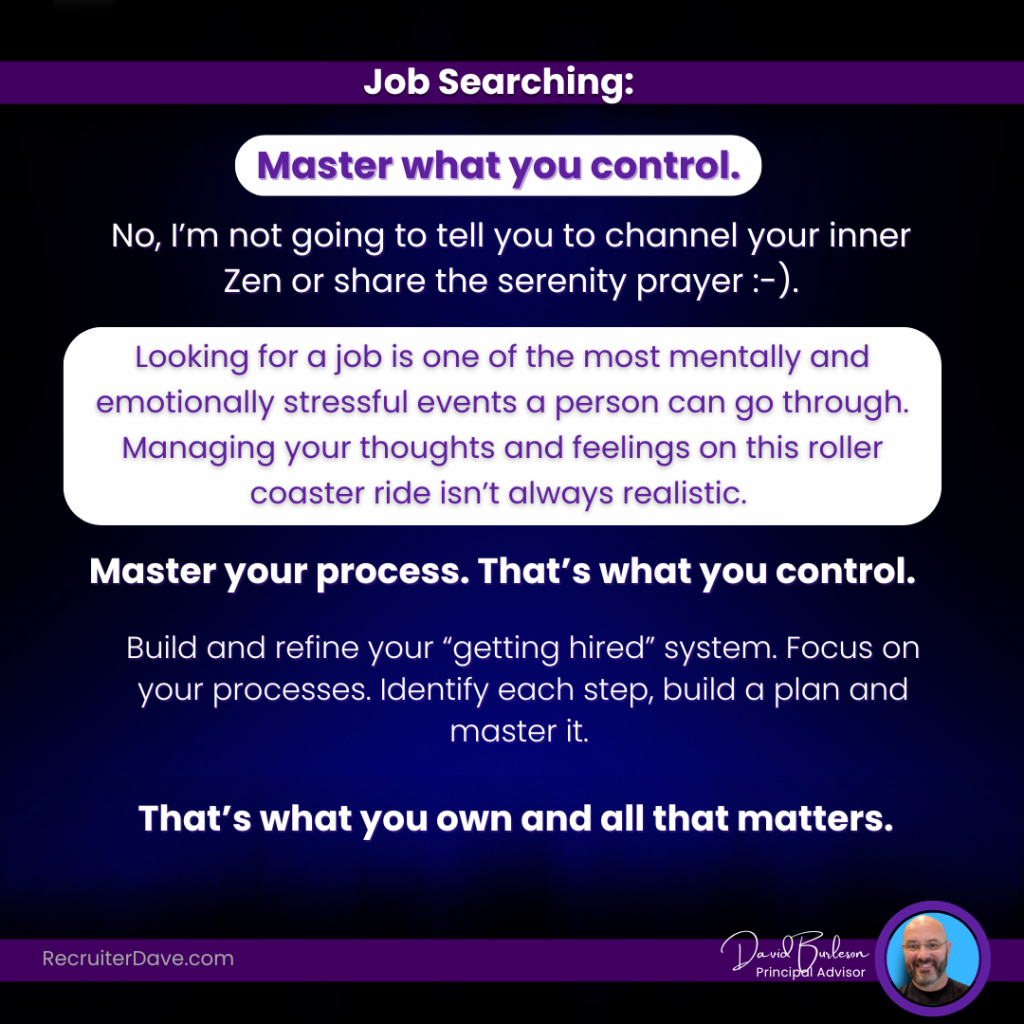

Hiring is a system.
It is not a clean system. It is not always fair. It is not always logical. But it is a system.
There are steps. Filters. People. Timing. Software. Assumptions. Pressure. Internal politics. Budget questions. Recruiter capacity. Hiring manager preferences. Risk. Trust. Communication gaps.
That is the machine you are trying to move through.
So if hiring is a system, your job search cannot just be hope with a resume attached.
That is emotionally brutal.
It also gives you very little useful information.
If the search is not working, you need to know where it is breaking.
It has to become a system built for that system.
That does not mean turning yourself into a robot. It means creating a process you can actually inspect.
Most people do not do that. They apply when they feel motivated. Rewrite the resume when they feel panicked. Network when they feel desperate. Follow up randomly. Measure the entire search by whether someone responded this week.
- Are you choosing the wrong roles?
- Are you chasing titles that sound right but do not match your actual value?
- Is the resume unclear?
- Is the LinkedIn profile supporting the story or confusing it?
- Are you relying only on crowded public postings?
- Are you interviewing without understanding what the interviewer is really testing?
- Are you following up in a way that creates signal, or just noise?
Those are all very different problems. But when the search is treated as one giant emotional blob, every bad outcome feels like the same answer: maybe I am not good enough.
That is usually the least useful place to start.
System Thinking
A system lets you separate effort from outcome. It lets you look at target selection, resume signal, application quality, networking paths, follow-up, interview conversion, and post-interview review as separate pieces.
A system lets you separate effort from outcome. It lets you look at target selection, resume signal, application quality, networking paths, follow-up, interview conversion, and post-interview review as separate pieces.
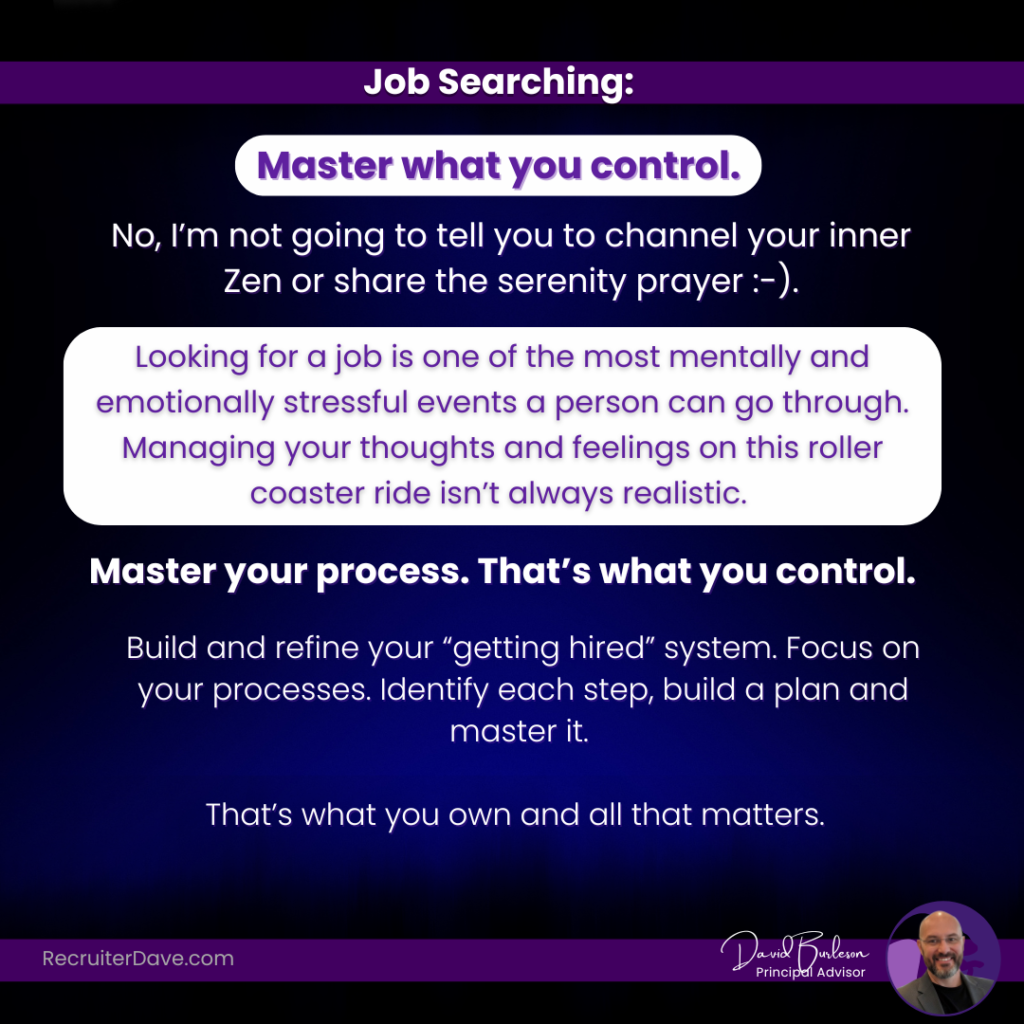
That matters because you may be doing three things well and one thing poorly. Or you may be aiming at the wrong market. Or you may be getting interviews but losing the thread when the conversation moves from skills to fit.
You cannot improve what you do not inspect.
And you cannot inspect a job search that exists only in your head.
Write it down. Track the roles. Track the source. Track why you applied. Track whether you had a real fit reason. Track whether there was a backroad. Track the response. Track the lesson.
This is not busywork. It is how you stop guessing.
The goal is not to control every outcome. You cannot. Some decisions will happen behind doors you never get to enter.
The goal is to control the quality of your aim, your signal, your preparation, your follow-up, and your ability to adjust.
That is the work.
Build a system for the system.
Then when something breaks, you are not left attacking yourself. You have something to audit.
Next action: break the search into steps you can audit instead of judging the whole thing by outcomes.